Structural Rigour, Prophetic Lament, and Divine Order: A Theological and Analytical Reading of Brahms Rhapsody in G Minor, Op. 79, No. 2
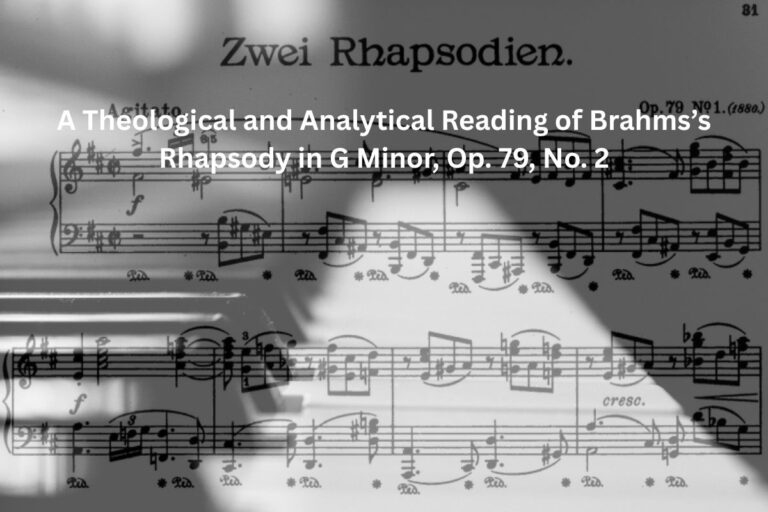
Johannes Brahms’s Rhapsody in G minor, Op. 79, No. 2 reveals a profound synthesis of technical architecture and Christian theological inquiry. Behind the tempestuous affect of its rhapsodic title lies a sonata-allegro structure that functions as an acoustic vessel of divine providence. Beginning in medias res with an accented submediant dissonance that withholds the tonic root, the composition articulates the physical trauma of Old Testament prophetic lament. The work subsequently traverses the desolation of Martin Luther’s theologia crucis through a hollow, octave-driven development section, counterbalanced by the communal memory of a secondary theme modelled on the Lutheran chorale. Evaluating the score alongside the divergent interpretive traditions of pianists such as Radu Lupu and Martha Argerich, this essay examines how Brahms disciplines existential grief within an unyielding sovereign container, ultimately resolving into a quiet, minor-mode eschatological vigil.