
Posts
-
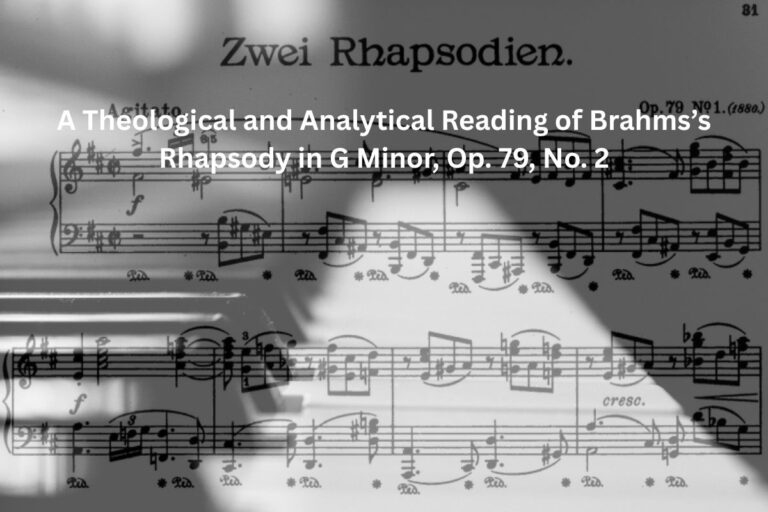
Structural Rigour, Prophetic Lament, and Divine Order: A Theological and Analytical Reading of Brahms Rhapsody in G Minor, Op. 79, No. 2
Johannes Brahms’s Rhapsody in G minor, Op. 79, No. 2 reveals a profound synthesis of technical architecture and Christian theological inquiry. Behind the tempestuous affect of its rhapsodic title lies a sonata-allegro structure that functions as an acoustic vessel of divine providence. Beginning in medias res with an accented submediant dissonance that withholds the tonic root, the composition articulates the physical trauma of Old Testament prophetic lament. The work subsequently traverses the desolation of Martin Luther’s theologia crucis through a hollow, octave-driven development section, counterbalanced by the communal memory of a secondary theme modelled on the Lutheran chorale. Evaluating the score alongside the divergent interpretive traditions of pianists such as Radu Lupu and Martha Argerich, this essay examines how Brahms disciplines existential grief within an unyielding sovereign container, ultimately resolving into a quiet, minor-mode eschatological vigil.
-
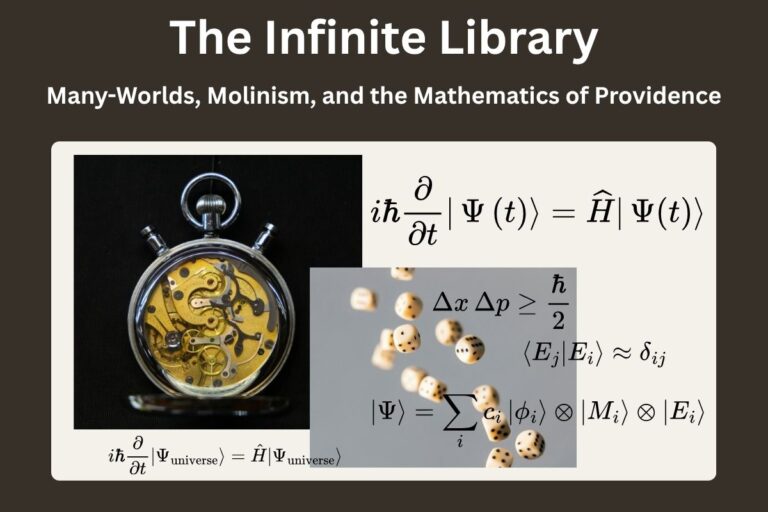
The Infinite Library: Many-Worlds, Molinism, and the Mathematics of Providence
A deeper examination of how quantum decoherence and the Many-Worlds multiverse parallel the theological concept of Molinist middle knowledge, exploring how infinite human choices remain anchored in an overarching, orderly reality.
-
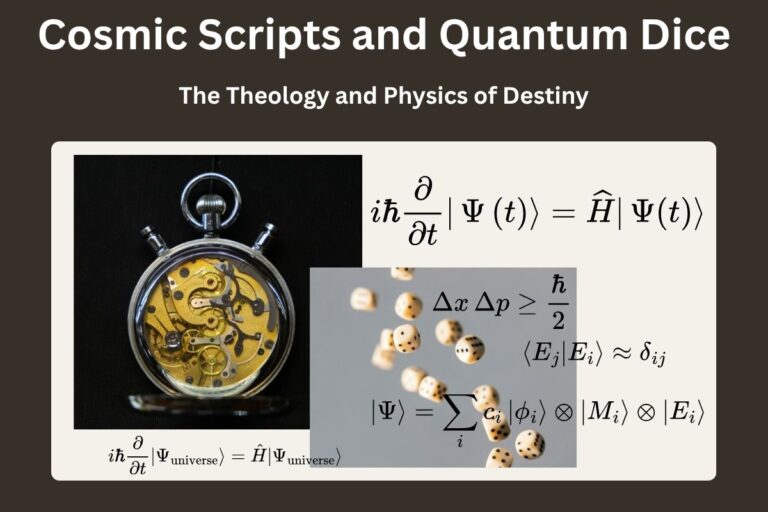
Cosmic Scripts and Quantum Dice: The Theology and Physics of Destiny
Does time flow like an unfolding river, or is reality a finished sculpture where past, present, and future already exist? In this essay, the classic divide between Calvinist predestination and Arminian agency meets Einstein’s spacetime and quantum indeterminacy, exploring how modern physics and ancient theology circle the exact same mystery of human destiny.
-
Tracing the Spanish Soul: A Performance of Ritmo from Danses Andalouses
Victor Gavino reflects on Ritmo from Danses Andalouse by Manuel Infante. Performing the music at a 2-piano recital with Stella Goldenberg Brimo. The soul of Andalusia brought to life in the music.
-
Journey to Easter: From Chopin’s Pathos of the Tomb to Mahler’s Shoreless Light
How does one transition from the sorrow of a funeral march to the uplifting light of the Resurrection? This piece examines Mahler’s Symphony No. 2, linking the deep feelings of Chopin’s Nocturne, Op. 48, No. 1, with Mahler’s expansive symphonic world. By looking at the changes in the medieval Dies Irae and the lightness of the choral ‘Misterioso,’ this article follows a musical journey from the sadness of the tomb to the joyful ‘Sunday’ of E-flat major. It reflects on how Mahler turns the mournful prayer of the grave into a bright promise of life.
-
The Master of Pathos: Chopin and the Blood-Stained Prayer in C-Minor
The Chopin Nocturne in C-minor, Op. 48, No. 1, is not merely a masterpiece of the Romantic era; it is a monolith of grief and a visceral, blood-stained prayer. In this Lenten meditation, we explore the ‘inexorable’ journey of a soul through the C-minor landscape of desolation, tracing the musical parallels to the biblical cries of Job, Jeremiah, and Jesus in Gethsemane. From the ‘noble dignity’ of the opening lament to the ‘bitter’ silence of the final chords, discover why this work remains one of the most emotionally devastating ever written for the piano.



Victor C. Gavino, PhD
A scientist, theologian, and musician exploring the intersections of leadership and early Christianity. From physiological chemistry to the study of the Apostle Paul, my work is a journey of integration—seeking clarity through academic rigour, pastoral reflection, and the disciplined art of the piano