
From Typhoons to Transformation: Finding Hope in a Factured World
The Fragility of an Innocent Joy
I still remember my childhood in the early 1960s, growing up on my grandfather’s hobby farm in the Philippines. My parents had a carpenter make me a sort of treehouse, a wooden platform perched 20 feet up in a massive mango tree. There, I would lose myself in books for hours. When I wanted a break from reading, I would spend time daydreaming, nestled comfortably atop the twisting branches of a guava tree I called my own. I will always remember the time my father gave me a kite as big as I was. Together, we flew it over the rice fields, watching it soar as the rice stalks swayed like waves in the gentle breeze.
However, everything changed in 1964. A Category 3 typhoon, the worst in over 80 years up to that point, slammed dead center into Manila. It ripped my mango and guava trees from the ground. I was just a boy, and losing those trees felt like a punch to the gut, shattering my sense of safety. I was unaccustomed to disappointment and loss.
The typhoon was a defining moment. It shattered my childhood illusion that life was an endless source of amusement. I began to realize how fragile joy can be and how quickly a storm can sweep it away. A few years later, in 1968, a devastating earthquake struck Manila, collapsing a six-story apartment building. I was part of a boys’ brigade sent to assist with rescue efforts. We were asked to sift through the rubble, but there was no one left to save. The smell of death and decay still haunts me—a stark reminder of life’s fragility.
The Search for an Anchor
These moments forced me to face difficult questions: Why do bad things happen? Where is the meaning in all this pain? These questions launched me on a decades-long search for purpose, a winding journey that finally led me to Jesus in my early 30s. I wrestled with the paradoxes of life—sorrow and joy, despair and hope—until I encountered the Risen Christ.
His life, death, and resurrection showed me that God enters our broken world not to leave it as it is, but to redeem it. Jesus became my anchor, offering a peace and stability I never thought possible. In Him, I found a hope rooted in God’s promise to make all things new.
The Anatomy of the New Creation
Today’s readings from Isaiah 65:17-25 and Psalm 118 speak directly to this hope. To understand the weight of Isaiah’s words, we must remember the pain of the people he was addressing. In the 580s BC, the Babylonians destroyed Jerusalem, burned Solomon’s Temple, and exiled the people to a foreign land.
Yet, in this darkness, God speaks through Isaiah with a promise that is nothing short of revolutionary: “See, I will create new heavens and a new earth. The former things will not be remembered, nor will they come to mind.” This is not merely a fresh coat of paint on a broken world; it is a complete renewal. God is not just repairing or patching things up; He is creating something entirely new, where the scars of the past—hunger, exile, and injustice—fade into oblivion. For the exiles, this was a lifeline. For us today, it is a reminder that no matter how broken life feels—whether it is stress over finances, health, housing, the loss of a building to fire, or global crises—God’s plan is to restore.
A Promise Born from Exile
What does this new creation look like? Isaiah paints a vivid, three-fold picture:
- A World of Joy: “I will create Jerusalem to be a delight and its people a joy” (v. 18). The sorrow that once defined God’s people will be replaced with celebration.
- A World of Peace with God: “Before they call, I will answer; while they are still speaking, I will hear” (v. 24). Imagine a relationship so close that God anticipates your needs before you voice them. This is the intimacy Jesus made possible through His death, tearing down the barrier of sin.
- A Transformation of Nature: saiah 65:25 declares, “The wolf and the lamb will feed together.” No longer predator and prey, they will live in harmony—a stunning picture of a world where nature’s violence is healed.
This peace flows from our restored relationship with God. It reshapes human relationships, ensuring no one is exploited or marginalized. As Psalm 118:22 reminds us, Jesus—the stone rejected by the world—has become the cornerstone. He is the foundation of a new community where justice and love prevail.
Living in the “In-Between”
Isaiah’s vision is both complete and incomplete. This new creation began through Jesus. When Christ rose from the dead, He launched God’s kingdom. But how do we live in this “in-between” time, when the kingdom is here but not yet fully realized?
First, we anchor our faith in the Risen Christ, our cornerstone. In ancient construction, the cornerstone was the reference point for the orientation, alignment, and integrity of the entire structure. All elements align with it. Jesus is the reference point for God’s kingdom. When doubts overwhelm us, we look to the empty tomb. We must align our lives with Him to ensure our own stability.
Second, we live out God’s peace. Isaiah’s vision is a call to action. The Holy Spirit empowers you to bring Christ’s Shalom to a broken world. Love your spouse, even when they are annoying. Love your family, regardless of the cost. Forgive the friend who let you down. Stand up for someone being treated unfairly. These acts, however small, reflect the “wolf and the lamb” dwelling together. As 2 Corinthians 5:20 states, we are “ambassadors for Christ.”
The Lesson of the Barong Tagalog
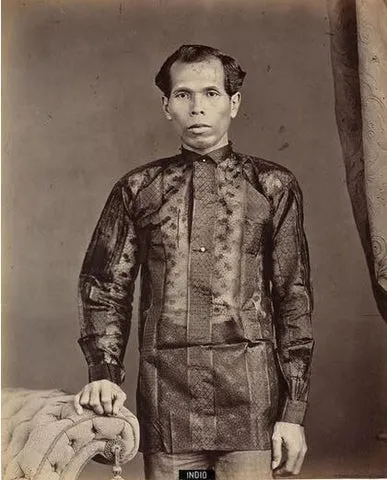
Today, I wear a barong tagalog, a traditional Filipino shirt. Its origins are rooted in oppression. During the Spanish colonial period, Filipinos were required to wear these shirts sheer and untucked. The transparency ensured no weapons were hidden, and the untucked style was a visible signal of inferiority meant to degrade and control.
However, my ancestors did something remarkable. They took this symbol of injustice and transformed it into something beautiful. Over time, the barong tagalog became formal attire for weddings and moments of honor. It now radiates resilience and dignity—a testament to the human spirit’s ability to find beauty amidst ugliness.
Similarly, through the Risen Christ, God weaves hope into the darkest moments. Just as the rejected stone became the cornerstone, Christ takes what is broken—whether a symbol of oppression or a world torn by sin—and redeems it.
In God’s kingdom, justice, mercy, and peace shine through the turbulence. Jesus began the new creation promised in Isaiah. In this season after Pentecost, let us trust Him, live in His peace, and hold on to the hope of a new heaven and earth. One day, all will be made new. Until then, let us build our lives on the Cornerstone.
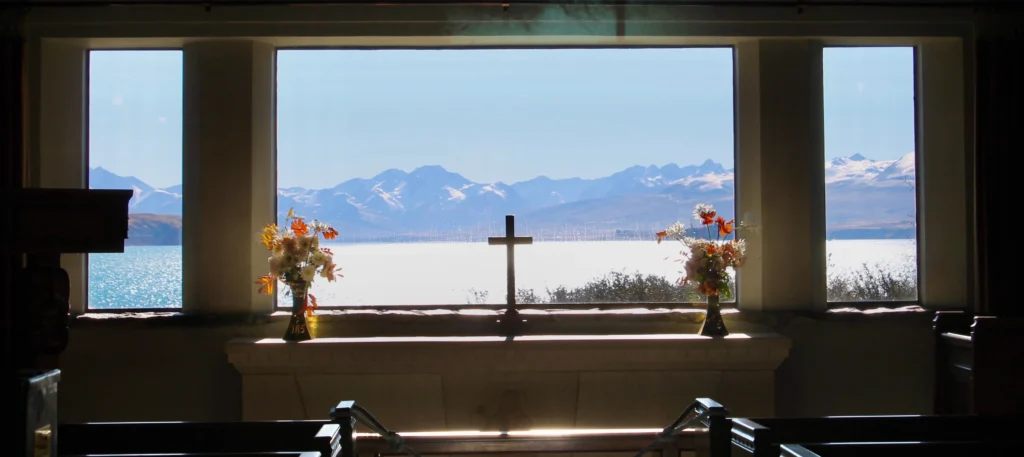
May Christ Jesus, the Cornerstone rejected by the world but precious to God, be the steady ground beneath your feet and the alignment for your every decision.
And may the Holy Spirit, who transforms symbols of oppression into garments of dignity, empower you to weave hope into the broken places of your neighborhood.
Go now in Shalom—to love your family, to forgive your friends, and to stand for the marginalized—knowing that before you call, He answers, and while you are yet speaking, He hears.
This is the day the Lord has made. Go and be glad in it!
