The Theologian
I am convinced that empirical inquiry eventually encounters a boundary where only wonder can continue the exploration. While science meticulously maps the brain, theology listens to the soul. Through these reflections, I strive to bridge the gap between what we can empirically validate and what we can only comprehend through faith, realizing that at the universe’s core lies not a cold equation, but a profound and welcoming Grace.
-
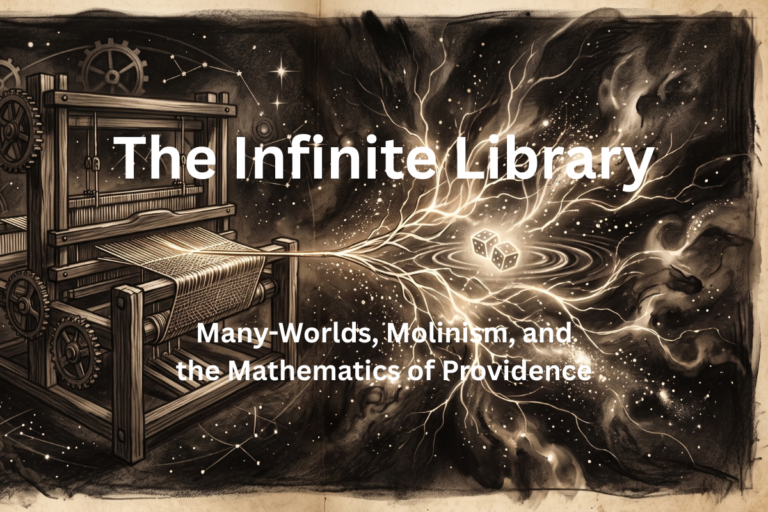
The Infinite Library: Many-Worlds, Molinism, and the Mathematics of Providence
A deeper examination of how quantum decoherence and the Many-Worlds multiverse parallel the theological concept of Molinist middle knowledge, exploring how infinite human choices remain anchored in an overarching, orderly reality.
-
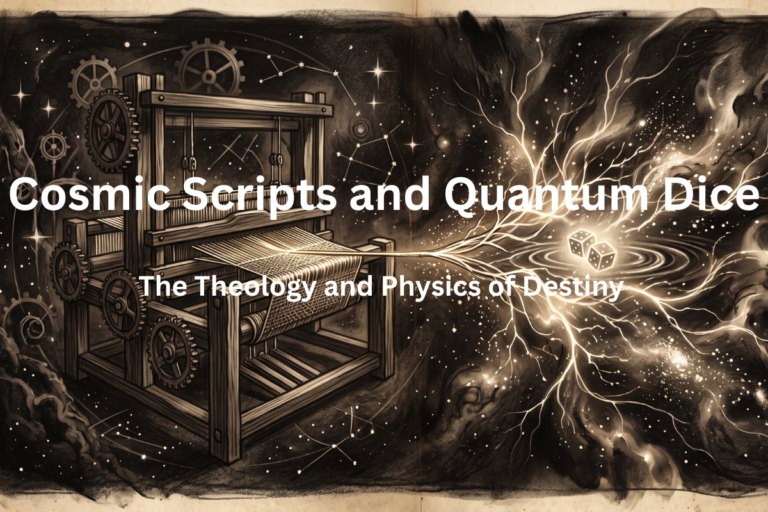
Cosmic Scripts and Quantum Dice: The Theology and Physics of Destiny
Does time flow like an unfolding river, or is reality a finished sculpture where past, present, and future already exist? In this essay, the classic divide between Calvinist predestination and Arminian agency meets Einstein’s spacetime and quantum indeterminacy, exploring how modern physics and ancient theology circle the exact same mystery of human destiny.
-
Journey to Easter: From Chopin’s Pathos of the Tomb to Mahler’s Shoreless Light
How does one transition from the sorrow of a funeral march to the uplifting light of the Resurrection? This piece examines Mahler’s Symphony No. 2, linking the deep feelings of Chopin’s Nocturne, Op. 48, No. 1, with Mahler’s expansive symphonic world. By looking at the changes in the medieval Dies Irae and the lightness of the choral ‘Misterioso,’ this article follows a musical journey from the sadness of the tomb to the joyful ‘Sunday’ of E-flat major. It reflects on how Mahler turns the mournful prayer of the grave into a bright promise of life.
-
The Master of Pathos: Chopin and the Blood-Stained Prayer in C-Minor
The Chopin Nocturne in C-minor, Op. 48, No. 1, is not merely a masterpiece of the Romantic era; it is a monolith of grief and a visceral, blood-stained prayer. In this Lenten meditation, we explore the ‘inexorable’ journey of a soul through the C-minor landscape of desolation, tracing the musical parallels to the biblical cries of Job, Jeremiah, and Jesus in Gethsemane. From the ‘noble dignity’ of the opening lament to the ‘bitter’ silence of the final chords, discover why this work remains one of the most emotionally devastating ever written for the piano.
-
Moses as Masterpiece: Identity and Leadership in the Greco-Roman World
During the Hellenistic and Greco-Roman eras, the reputation of Moses was contested, often maligned by non-Jewish critics. In response, Philo of Alexandria and Flavius Josephus crafted biographies that modified biblical accounts stylistically to elevate Moses’ status. By framing Moses within the classical traditions of “aretalogy” and “encomium,” they presented him as an idealized leader whose ancient traits, ranging from extraordinary wisdom to physical beauty, remain remarkably relevant to modern leadership models.
-
The Architect’s Anxiety: Between Robert Frost’s Design and the Tower of Babel
Explore Robert Frost’s “witches’ broth” of predation through a modern lens. Is the universe a “design of darkness,” or are our ideological boxes simply too small to grasp its complexity? From the Enlightenment’s “Tower of Babel” to the restorative peace of Isaiah, discover how we move from the arrogance of the architect to the awe of the observer.