The Anchor of Faith: From Habakkuk to Luther
The Question That Haunted a Monk
On October 31, 1517, Martin Luther nailed his 95 Theses to the door of the Castle Church in Wittenberg. While he was famously incensed by the friar Johann Tetzel—who peddled the idea that souls could be “sprung” from purgatory for a price—the Reformation was about much more than a protest against financial corruption.
At its heart was a deeper, more terrifying question: How can I stand righteous before a holy God?. Luther wrestled with the reality of God’s perfect justice. If even flawed human judges must punish wrongdoing to be considered “just,” how much more must a holy God judge us when we fall short?. This realization initially drove Luther to despair. However, everything changed when he rediscovered the words of the Apostle Paul in Romans 1:16-17: “The righteous will live by faith”. Luther said this verse changed everything for him; where “the righteousness of God” once filled him with fear, it now felt “inexpressibly sweet”—a doorway to hope.
Let’s begin with three fundamental questions:
- First: Who are the righteous?
- Second: What does it mean to live?
- Third: What is faith?
A Breakthrough in a Broken World
The Apostle Paul was quoting the prophet Habakkuk, a man who lived in a world as fractured and chaotic as our own. In Habakkuk’s Judah, the law was ignored, leaders were corrupt, and the powerful exploited the weak.
Haunted by the surrounding chaos, Habakkuk poured out his heart to God. You can almost hear the visceral pain in his words: “God, if You are just, then why don’t You do something? Why let this go on?” It is a cry that echoes through the centuries. When innocents perish in disasters, violence, or systemic oppression—when governments crush the very people they are meant to protect—don’t we wonder the same? “Where is God?” If you’ve ever looked at the world and felt that God was silent in the face of suffering, you’re standing in Habakkuk’s shoes.
God’s answer, however, shocked him to his core. He didn’t promise an immediate rescue; instead, He said, “I’m raising up the Babylonians to conquer you.” To Habakkuk, this was unthinkable. The Babylonians were pagans and idol-worshippers—a nation far more ruthless than Judah. How could a holy God use a wicked nation to punish His own people? It would be like a parent calling the neighbourhood bully to discipline their child. Reeling from the news, Habakkuk cried out, “God, how is this fair?”
God’s response was simple and direct: “Wait. The righteous will live by faith.” In this anchor for the soul, God provides three parallel answers to our deepest anxieties, the three fundamental questions we posed at the beginning:
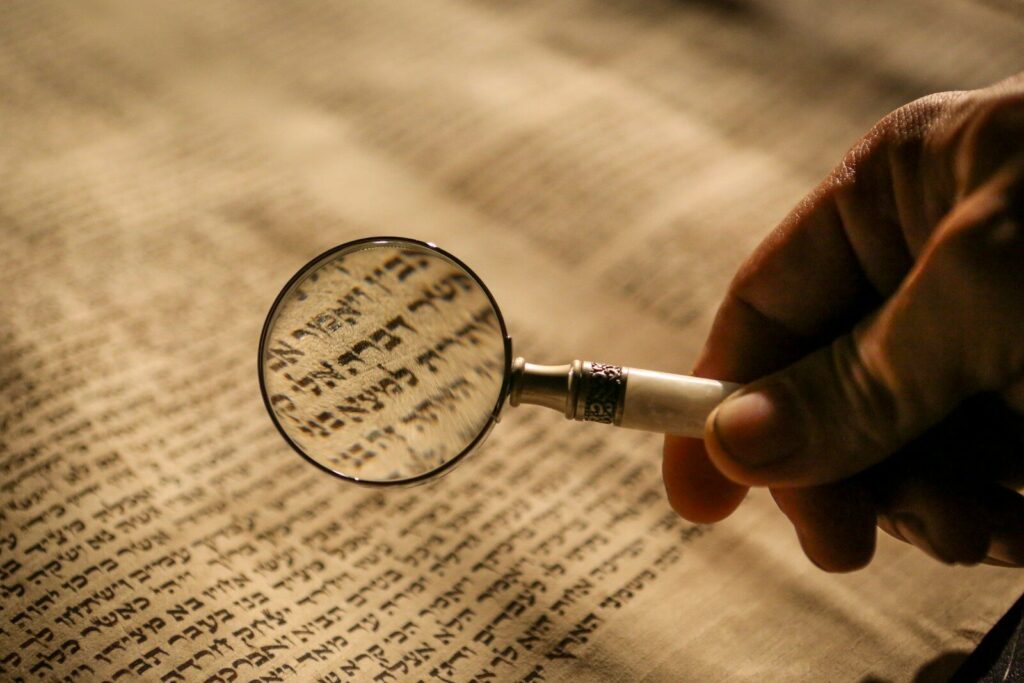
Faith is not a static intellectual belief, but faithfulness in action—the stubborn refusal to be crushed by chaos because we know who is ultimately in control.
First, He reveals that the righteous are those He declares guilt-free despite the world’s accusations. This isn’t earned through our own perfection, but is a status granted by the Divine Judge to those who trust Him.1Genesis 15:6: “Abram believed the Lord, and he credited it to him as righteousness.” This foundational text establishes that a righteous standing is “credited” to us by grace through belief. See also Psalm 32:1-2, which describes the blessing of having sin “not counted” against us by the Lord.
Second, He shows that to live is to thrive with a divine security that remains intact even under the shadow of Babylon. In the biblical sense, “life” is far more than biological survival; it is the joy and flourishing found in God’s presence.2Psalm 16:11: “You make known to me the path of life; you will fill me with joy in your presence.” Biblical “life” is a vibrant wholeness (Shalom) that persists even in trials. See also Deuteronomy 30:19-20, where choosing life is equated with loving and clinging to the Lord.
And finally, He clarifies that faith is not a static intellectual belief, but faithfulness in action. The Hebrew word used here is אֱמוּנָה (’emûnâ), which suggests a stubborn, steady reliability—the refusal to be crushed by chaos because we know who is ultimately in control.3Exodus 17:12: The word for faith (אֱמוּנָה) is first used here to describe Moses’ hands being held “steady” or reliable until sunset. In the Old Testament, faith is inseparable from “doing good” and remains constant through adversity (see Psalm 37:3).
Put it all together, and “the righteous will live by faith” means this:
Even when the world is falling apart—when it’s hardest to believe in a good, almighty God—the righteous keep trusting. They stay faithful. They refuse to be crushed by chaos. They live
The Surgery of Trust
I recall a time I was in agony from a cracked and infected molar, nearly blacking out from the pain. I ended up in emergency surgery, my heart racing with fear. What got me through that chair was trust: not in myself, but in a calm, confident surgeon who explained the plan.
My pain was trivial compared to Habakkuk’s, yet the message remains the same: “Trust Me”. By the end of his journey, Habakkuk found a peace that transcended his circumstances. He realized that even if the fig tree does not bud and the vines produce no grapes, he could still rejoice because the Sovereign Lord was his strength.
The Gift of Grace
Paul takes this even further for us today. Righteousness isn’t about perfect obedience—none of us can manage that—it is about faith in what Christ has done. Through Him, God declares us as righteous as Jesus Himself.
Today, we might be tempted to dismiss Luther’s anguish as a relic of a bygone era. But dismissing the question of how we stand before God is often just a way of running from Him. Whether it is the challenge of shrinking congregations in the West, or personal trials of illness, financial insecurity, or loneliness, we all face the “shadow of death”. Like Habakkuk, we are allowed to be bold in our questions. We can ask, “God, why is this happening to me?”. And for thousands of years, the answer has remained: “Wait and see. The righteous will live by faith”.
Conclusion
We cannot bribe God with religious performance or “indulgences”. Our piety will always fall short of His glory. We are saved by faith, and it is a gift of God because we are precious in His sight.
Our response to the roller coaster of life is simple: We will not be defeated. We will trust Christ and live faithfully in His way. When we see the world from His perspective, He gives us “swift feet” to climb the high places4Habakkuk 3:19: “The Sovereign Lord is my strength; he makes my feet like the feet of a deer, he enables me to tread on the heights.” This concluding song of Habakkuk shows the prophet moving from the “valley” of his questions to the “high places” of absolute trust. and “wings like eagles” to soar above the storm.5Isaiah 40:31: “But those who hope in the Lord will renew their strength. They will soar on wings like eagles; they will run and not grow weary, they will walk and not be faint.”
Do you believe this with all your heart? It is, ultimately, a question of faith.
References
- 1Genesis 15:6: “Abram believed the Lord, and he credited it to him as righteousness.” This foundational text establishes that a righteous standing is “credited” to us by grace through belief. See also Psalm 32:1-2, which describes the blessing of having sin “not counted” against us by the Lord.
- 2Psalm 16:11: “You make known to me the path of life; you will fill me with joy in your presence.” Biblical “life” is a vibrant wholeness (Shalom) that persists even in trials. See also Deuteronomy 30:19-20, where choosing life is equated with loving and clinging to the Lord.
- 3Exodus 17:12: The word for faith (אֱמוּנָה) is first used here to describe Moses’ hands being held “steady” or reliable until sunset. In the Old Testament, faith is inseparable from “doing good” and remains constant through adversity (see Psalm 37:3).
- 4Habakkuk 3:19: “The Sovereign Lord is my strength; he makes my feet like the feet of a deer, he enables me to tread on the heights.” This concluding song of Habakkuk shows the prophet moving from the “valley” of his questions to the “high places” of absolute trust.
- 5Isaiah 40:31: “But those who hope in the Lord will renew their strength. They will soar on wings like eagles; they will run and not grow weary, they will walk and not be faint.”